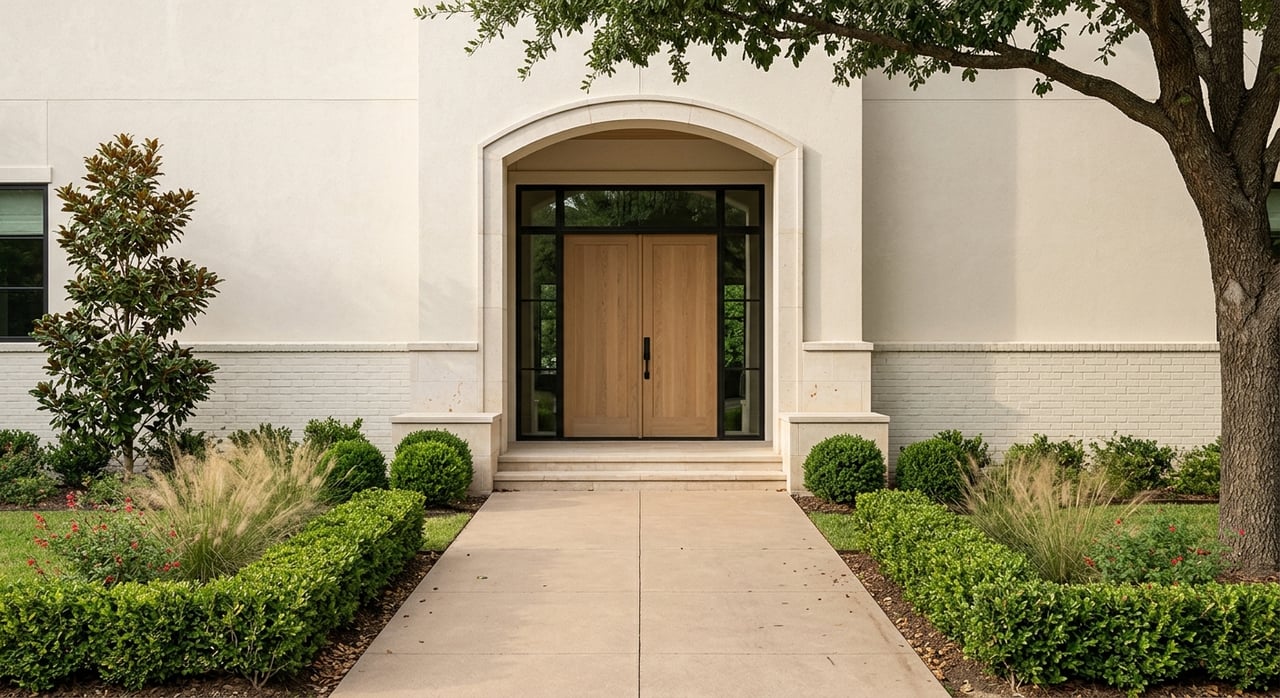
If you are trying to decide between a newer area and an established one in Flower Mound, the real question is not just about home age. It is about how you want to live day to day, how much land you want, and whether you value shared amenities, mixed-use convenience, or a more private conservation setting. In Flower Mound, those choices are shaped by thoughtful long-range planning, and once you understand that framework, your search becomes much clearer. Let’s dive in.
Flower Mound Offers Two Distinct Lifestyles
Flower Mound’s growth pattern has been shaped by SMARTGrowth, adopted around 1999 and 2000 after a late-1990s residential boom. The town uses that approach to help preserve open land, manage infrastructure capacity, protect community character, and maintain a connected park and trail system.
That matters because “newer” and “established” do not simply mean newer construction versus older homes. In Flower Mound, the bigger difference is often master-planned convenience versus conservation-oriented space. If you are comparing neighborhoods, that lens will usually tell you more than the year a home was built.
The town’s scale also supports a wide range of choices. Flower Mound’s 2024 population estimate is 81,270, with projected growth to 110,591 by 2045, and it remains a high-ownership market with 82.5% owner-occupied housing and a median owner-occupied home value of $560,200.
What Newer Areas Often Feel Like
Newer areas in Flower Mound tend to offer more product variety and a higher concentration of planned amenities. Depending on the district, you may find large detached homes, urban-style residential options, or a mix of homes, dining, offices, and parks in one setting.
For many buyers, the biggest appeal is convenience. Instead of relying only on townwide amenities, newer districts often build daily-use features right into the neighborhood experience.
Canyon Falls
Canyon Falls is one of the clearest examples of newer master-planned living on the west side of Flower Mound. It is a 1,242-acre community in the Denton Creek District, with about 626 acres inside Flower Mound.
The homes here are not small by default. Current builders offer homes starting around 2,700 square feet and extending beyond 5,000 square feet, with pricing from the $600s to over $1 million, alongside 200 acres of natural open space, 10 miles of paved trails, and four miles of natural trails.
The amenity package is also a major part of the lifestyle. Pools, a splash pad, and other shared features are part of the community, and the 10.5-acre Canyon Falls Park opened in June 2024 with a splash pad, playground, basketball court, fitness equipment, pavilion, trails, restrooms, and parking.
River Walk at Central Park
River Walk at Central Park offers a very different version of “newer.” This 158-acre mixed-use development combines residential, commercial, office, retail, dining, medical, and civic uses, with 46.5 acres of parks and open space in or adjacent to the site.
If you want a neighborhood where errands, dining, and services feel close at hand, this kind of district can be very appealing. It does, however, create a more active and mixed-use environment than a traditional subdivision.
Lakeside DFW and Lakeside Village
Lakeside DFW brings a more urban-style residential experience next to Lake Grapevine. The 160-acre development includes a boardwalk, shops, cafes, offices, and multiple residential choices.
Lakeside Village, the final phase, adds lakefront restaurants, hotels, shops, offices, trails, an amphitheater, custom villa homes, and high-rise residential options. In southeast Flower Mound, this area is still evolving as projects continue to deliver.
A Key Trade-Off in Newer Districts
Newer areas can be highly convenient, but they do not all feel the same. Some, like Canyon Falls, lean toward larger single-family living with extensive trails and open space, while others, like River Walk and Lakeside, blend residential life with retail, office, and entertainment uses.
That means you should think beyond the word “new.” Ask yourself whether you want a traditional home setting, a mixed-use environment, or something in between.
What Established Areas Often Feel Like
Established areas in Flower Mound often appeal to buyers who want more land, more privacy, or a stronger conservation setting. These areas may feel less centered on newly built amenities and more connected to the town’s broader trail network, mature surroundings, and lower-density character.
In many cases, the value is in the setting itself. You may give up some walkable mixed-use convenience, but gain outdoor space, separation between homes, or a more natural environment.
Cross Timbers Conservation District
The Cross Timbers Conservation Development District is Flower Mound’s clearest example of larger-lot established living. The town describes it as predominantly residential, with single-family homes typically on two-acre lots or greater, along with conservation easements and other techniques designed to protect the Cross Timbers ecosystem.
This district is also important from a practical standpoint. The master plan does not provide sewer service to the area, and the town created the district to help preserve ecological features and the town’s country atmosphere while still allowing sensitive development.
There is also an alternative conservation format that allows one-acre lots if 50% of the land is preserved as open space. For buyers, that makes it especially important to verify utility type, lot configuration, and district rules on a specific property.
Established Subdivisions and Corridors
Beyond conservation districts, established neighborhoods throughout Flower Mound are still closely tied into the town’s overall infrastructure. The trail map shows routes through existing subdivisions like Westchester, Timber Creek, and Wilkerson, which highlights that older neighborhoods are not disconnected from parks and mobility.
Flower Mound’s trail system has grown from 3 miles in 1989 to more than 66 miles today. That network connects parks, neighborhoods, schools, businesses, and other neighborhoods, which means established areas can still offer strong day-to-day connectivity even without being part of a newer master-planned development.
How To Compare Newer And Established Areas
The best choice usually comes down to your priorities. In Flower Mound, you are often comparing two different residential logics rather than a simple old-versus-new decision.
Here are the main factors to weigh.
Compare Lot Size First
If outdoor space, acreage, or buffer from neighbors is high on your list, established conservation-oriented areas deserve close attention. The Cross Timbers Conservation Development District is the clearest local example, with two-acre-or-greater lots in many cases.
If you are more interested in shared amenities than private land, newer master-planned areas may be a stronger fit. In places like Canyon Falls, more of the lifestyle value is built into trails, parks, and common amenities rather than larger private lots.
Compare Home Type And Upkeep
A common mistake is assuming newer always means smaller or easier to maintain. Flower Mound does not follow that rule across the board.
Canyon Falls shows that newer can still mean large detached homes, while Lakeside Village includes a broader mix such as villa homes and high-rise residential. If low-maintenance living matters to you, check the exact product type rather than assuming all newer options offer the same experience.
Compare Amenities And Daily Convenience
Flower Mound already has a strong parks-and-trails baseline, with more than 1,000 acres of parkland and more than 66 miles of paved trails. That gives buyers in both newer and established areas meaningful access to outdoor amenities.
The difference is how concentrated that convenience feels. Newer mixed-use districts may bundle dining, offices, retail, and recreation closer together, while established areas often rely more on the broader town network.
Compare Commute And Location Patterns
For many buyers, location is about daily movement as much as neighborhood feel. Census data shows a mean travel time to work of 26 minutes in Flower Mound, and the town also highlights quick access to DFW Airport.
That can make certain locations especially appealing depending on where you work or how often you travel. It is worth comparing not just the home, but also how the area connects to your regular routine.
Verify District And Utility Details
In Flower Mound, address-level verification matters. School assignment varies by address, with most of the town served by Lewisville ISD and Argyle ISD, and smaller portions served by Denton, Grapevine-Colleyville, and Northwest ISDs. Canyon Falls specifically spans Argyle ISD and Northwest ISD.
You should also confirm zoning, utility type, HOA rules, and whether a home is inside a conservation district, planned development, or mixed-use area. The town’s GIS and development tools are especially helpful for confirming those details before you commit.
A Simple Way To Decide
If you want larger lots, added privacy, and a conservation-minded setting, established areas may line up better with your goals. If you want newer construction, planned amenities, or a district where residential life is closely integrated with shopping, dining, or offices, newer areas may be the better match.
Neither option is automatically better. The right fit depends on whether you want your lifestyle value to come from private space and land or from shared amenities and built-in convenience.
In a market like Flower Mound, that distinction can make your home search much more focused. It can also help you avoid comparing neighborhoods that serve very different needs.
When you are evaluating Flower Mound at this level, local context matters. Denise brings a concierge approach, strong neighborhood knowledge, and practical homesite insight that can help you compare location, lot value, and lifestyle fit with more confidence. If you are weighing your next move in Flower Mound, connect with Denise McCormick (TX) for tailored guidance.
FAQs
What do newer areas in Flower Mound usually offer?
- Newer areas in Flower Mound often offer planned amenities, product variety, and in some cases mixed-use convenience with residential, retail, dining, office, and open-space features in the same district.
What area best represents larger lots in Flower Mound?
- The Cross Timbers Conservation Development District is the clearest local example of larger-lot living, with single-family homes typically on two-acre lots or greater and a strong conservation focus.
Are newer Flower Mound neighborhoods always smaller homes?
- No. Canyon Falls shows that newer areas can still include large detached homes starting around 2,700 square feet and extending beyond 5,000 square feet.
Which Flower Mound areas have the strongest mixed-use feel?
- River Walk at Central Park and Lakeside DFW and Lakeside Village are the strongest examples because they intentionally combine residential uses with retail, office, dining, and open space.
What should you verify before choosing a Flower Mound neighborhood?
- You should verify the exact school district, zoning, utility type, HOA rules, and whether the property is in a conservation district, planned development, or mixed-use corridor.
Do established Flower Mound areas still connect to trails and parks?
- Yes. Flower Mound’s trail system includes more than 66 miles of trails connecting parks, neighborhoods, schools, businesses, and other neighborhoods, including routes through established subdivisions.
